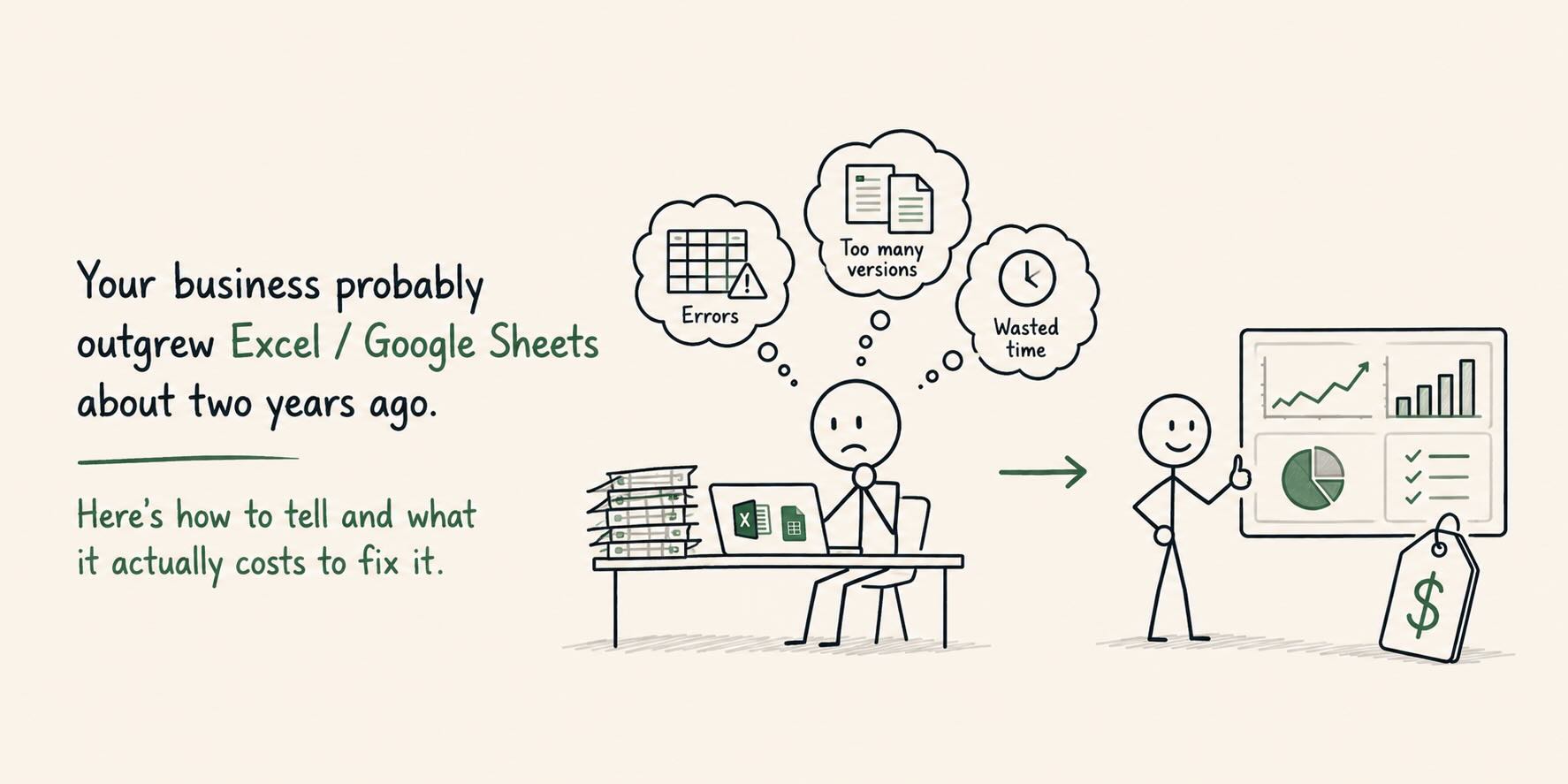
Your operation runs on spreadsheets, email threads and WhatsApp approvals.

We replace that with software built around how you actually work.

Custom operational software since 2013. Systems running today at a 20-institution education group, a national infrastructure contractor, and a publishing house running its own ERP and warehouse — Deccan Education Society, GR Infra Projects, Rajhans Prakashan, MKCL.

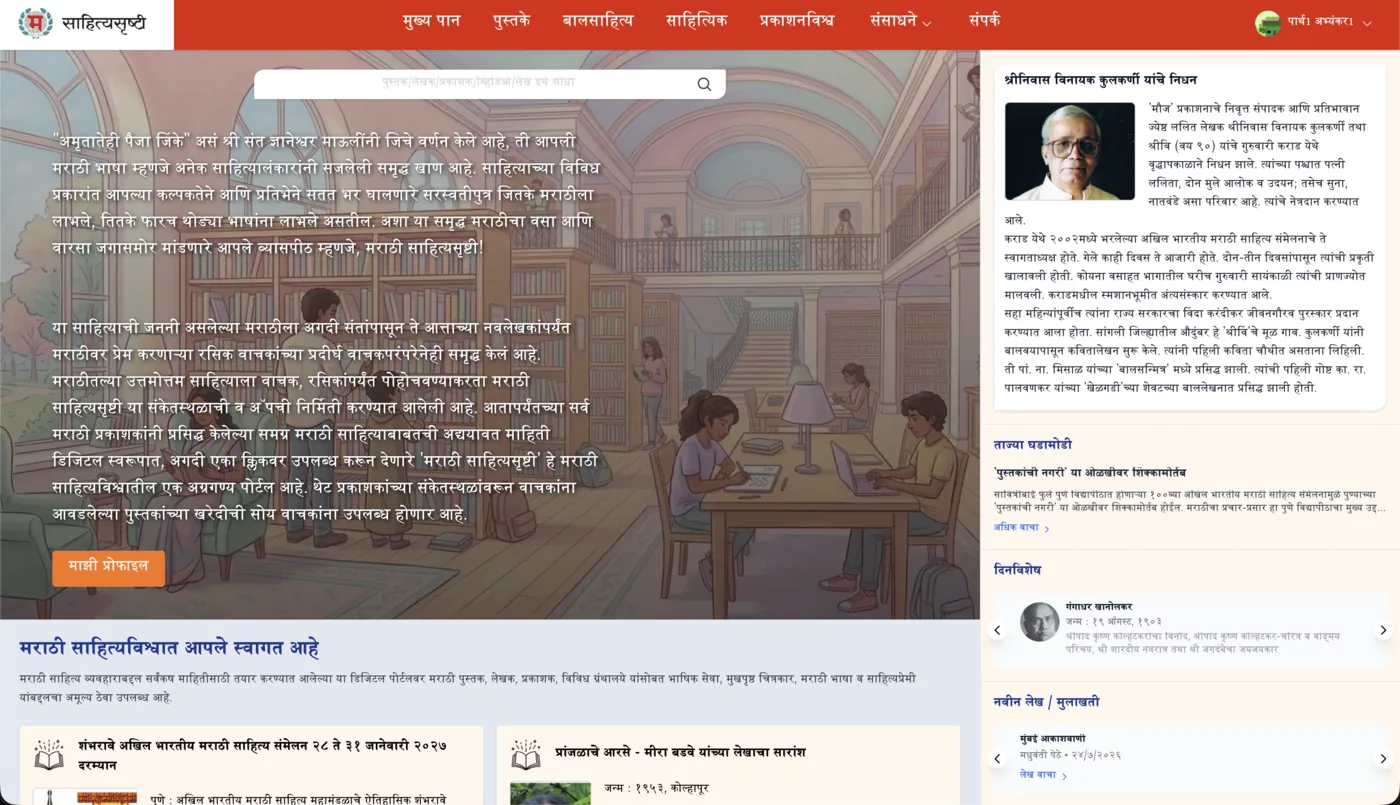
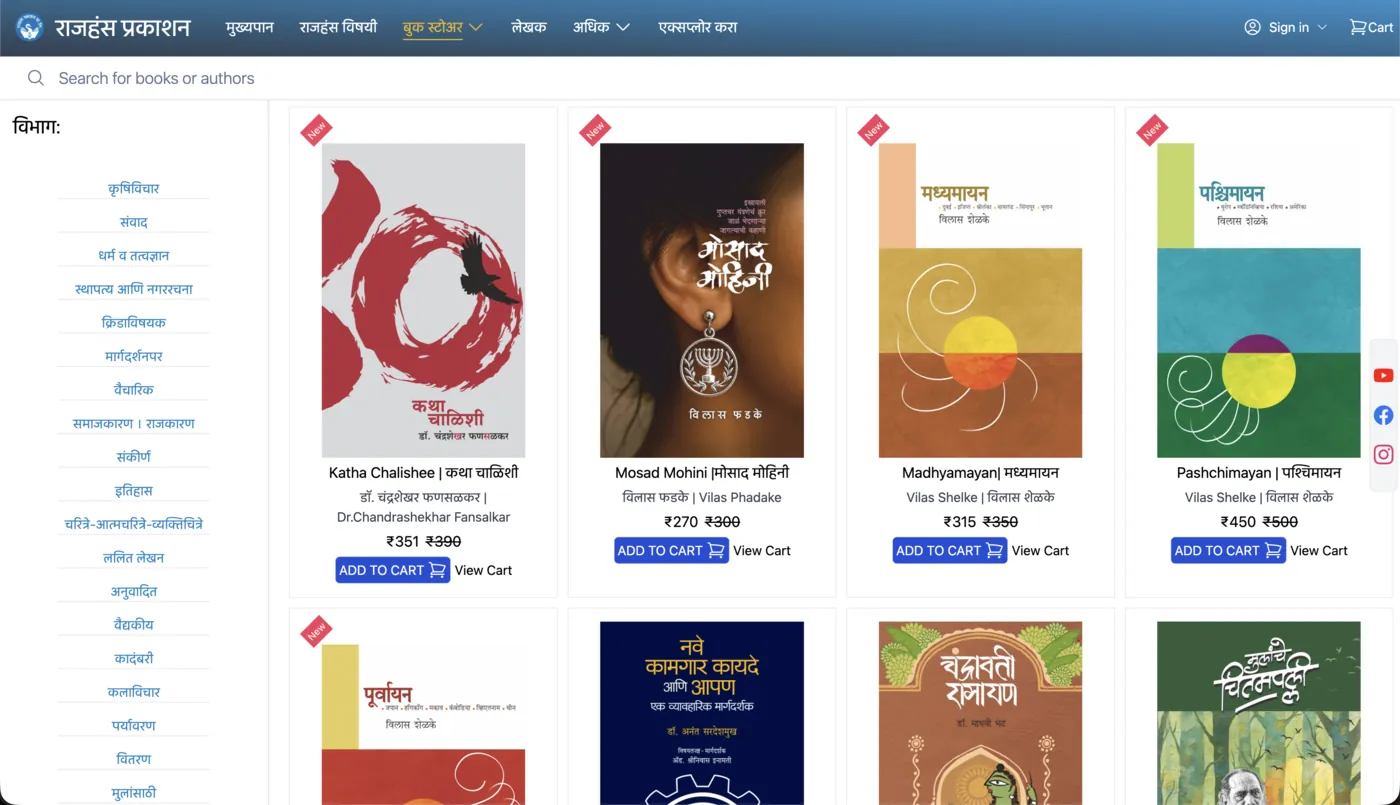
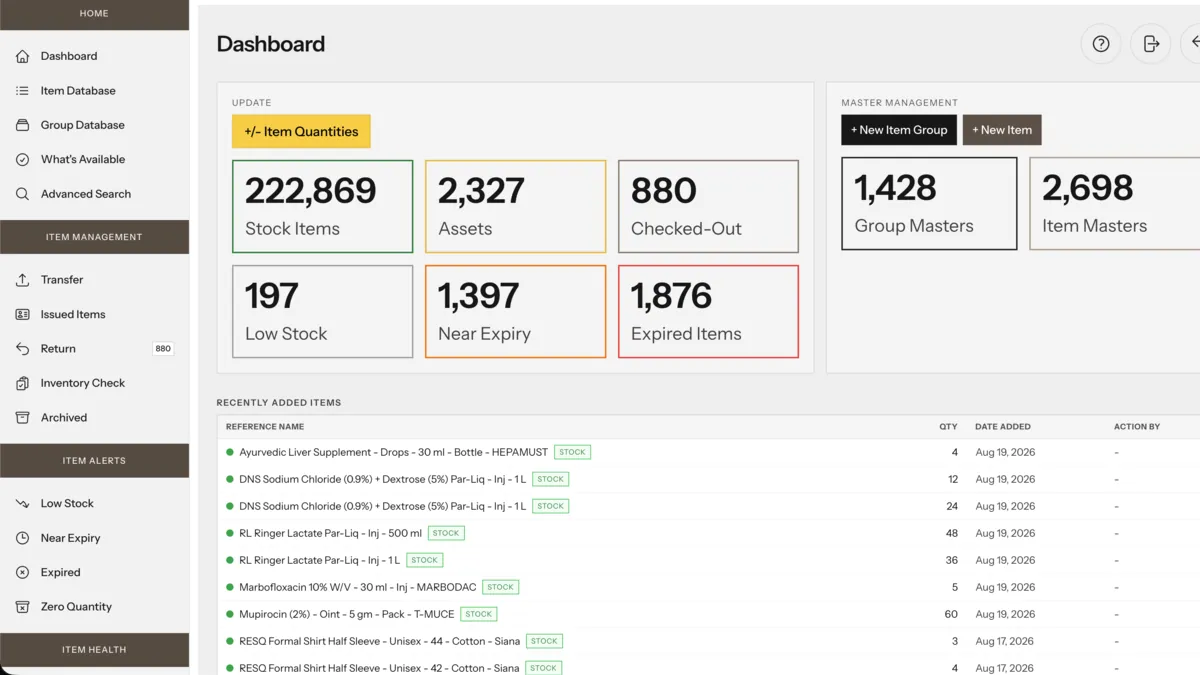
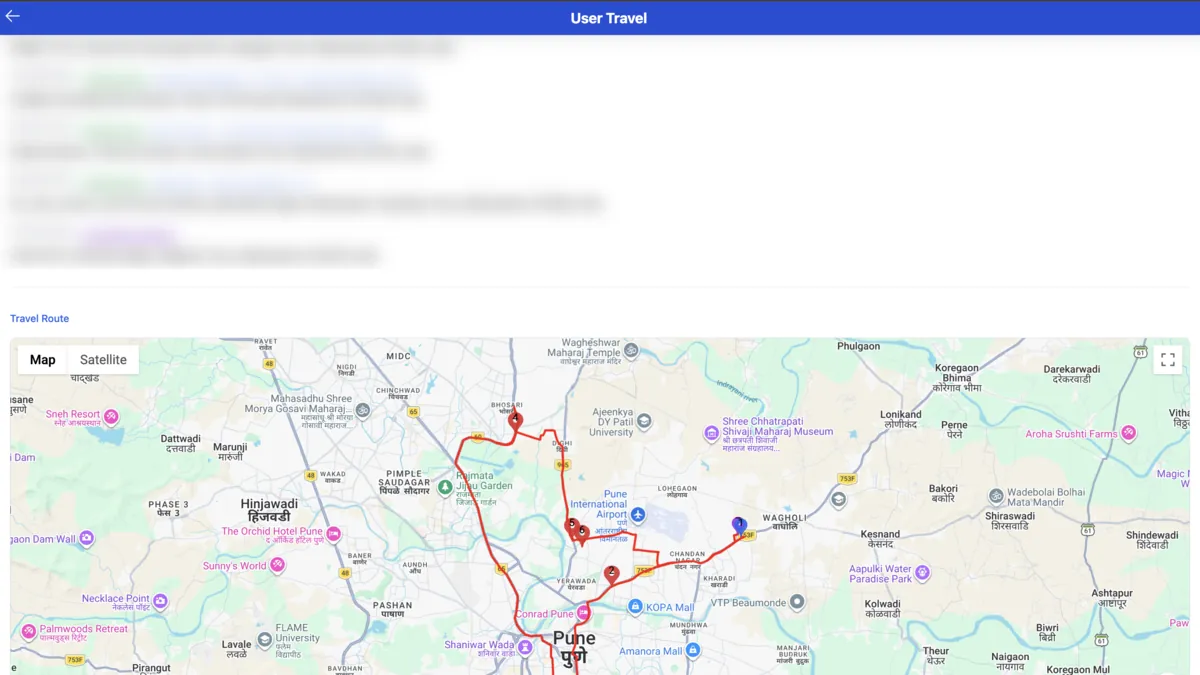
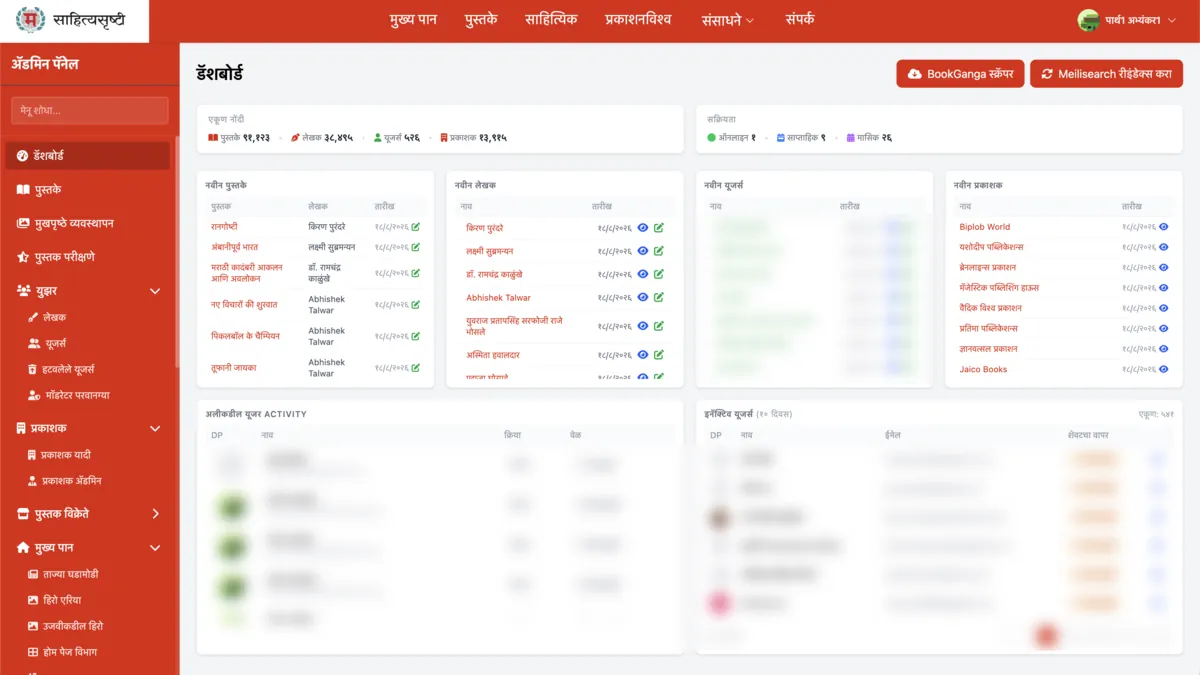
An inventory control dashboard from a running system, showing 222,869 stock items, 2,327 assets, 197 low-stock items and 1,876 expired items, above a live list of recently added stock. A field service screen showing one technician's day: timestamped follow-up visits with client details blurred out, and the resulting travel route plotted across Pune. A Marathi-language admin panel for a literature platform, showing counts of 11,123 books, 38,495 authors and 13,915 publishers, with panels of recent additions and member activity blurred out.

Inventory control — 222,869 items tracked across stock, assets and expiry.

Sound familiar?

  • The master sheet only one person fully understands — and she's on leave this week.
  • Approvals that live in a WhatsApp group, and can't be reconstructed six months later when someone asks who signed off.
  • A monthly report that takes three days to assemble by hand from four different files.
  • A product you bought for a different kind of business, patched and worked around for four years.

If two of these are your week, the rest of this page is for you.

Proof

Three systems we built, and what changed

26+ school sites on one platform Deccan Education Society

The problem. Every institution in the group ran its own website independently, which meant no shared admissions or notice workflow, no consistent way to publish across wings, and no single place to make a change that had to appear everywhere.

What we built. A multi-site platform on one unified CMS. The group deploys and manages each school site centrally, and every school carries its own sub-sites for pre-primary, primary and secondary wings without a separate build for each.

What changed

26+

school and sub-school sites on one CMS
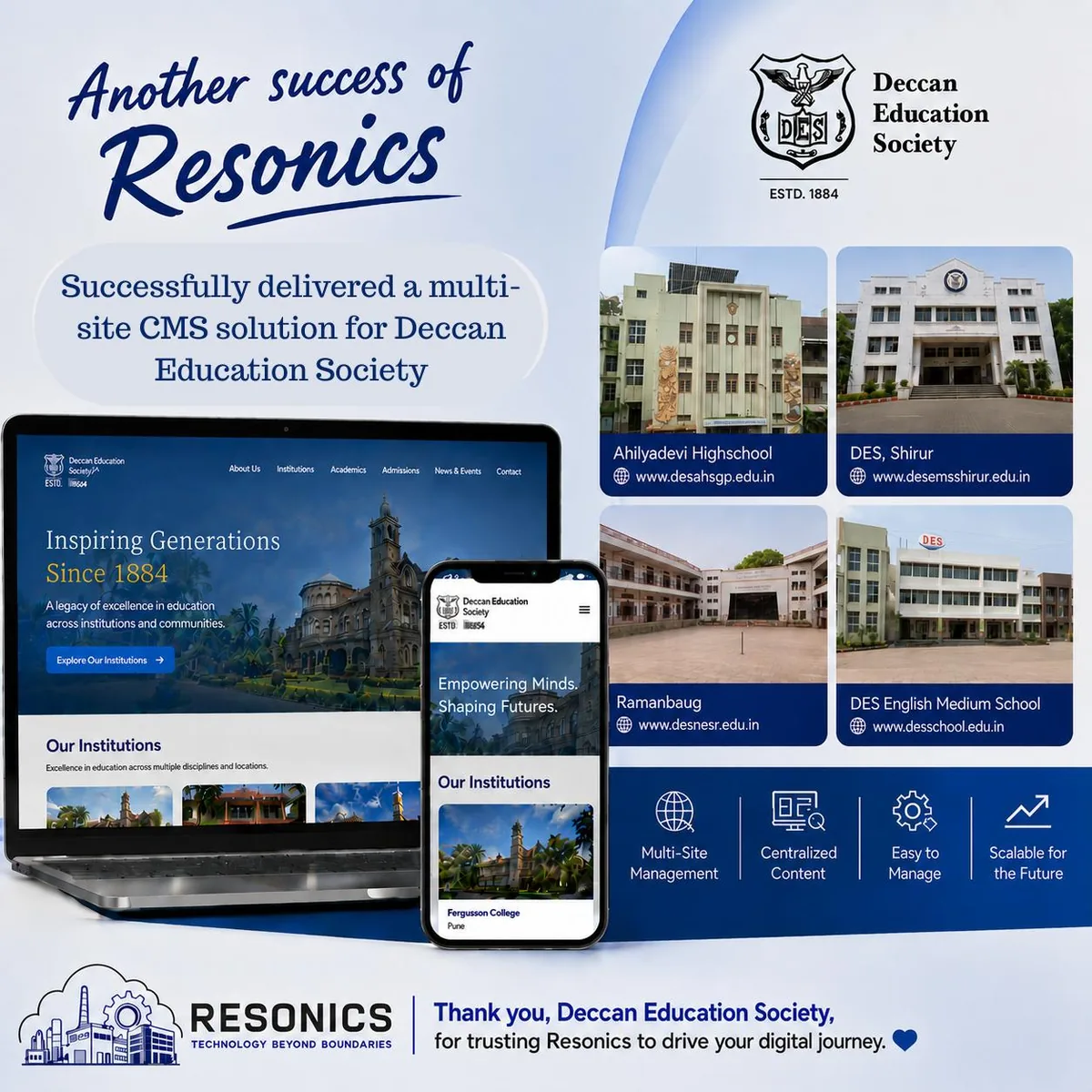
26+ school sites on one platform — a screen from the system built for Deccan Education Society, client data blurred.
Read the full story

A searchable record of a language's entire published literature MKCL Knowledge Foundation

The problem. The record of Marathi publishing — which books exist, who wrote them, who published them — was scattered across catalogues and archives with no structured, queryable form, which made it effectively undiscoverable online.

What we built. A structured knowledge base linking books, authors and publishers as related records rather than flat listings, so the catalogue can be searched, cross-referenced and browsed by relationship.

What changed

1,00,000+

books catalogued, with 40,000+ author profiles and 16,000+ publishers

A searchable record of a language's entire published literature — a screen from the system built for MKCL Knowledge Foundation, client data blurred.
Read the full story

ERP, warehousing and e-commerce for a publishing house Rajhans Prakashan

The problem. A publishing house running its catalogue, its warehouse and its direct sales as three disconnected operations, with stock and order information that had to be reconciled by hand.

What we built. A complete ERP with warehousing and an e-commerce storefront on top of it, so the catalogue, stock and online orders are one system rather than three that have to agree with each other.

Resonics demonstrated an excellent understanding of our requirements from day one. Their innovative approach to implementing our complete ERP, warehousing system, and e-commerce platform was impressive. They delivered exactly what we envisioned, and more.
Shirish Shevalkar, Director, Rajhans Prakashan
ERP, warehousing and e-commerce for a publishing house — a screen from the system built for Rajhans Prakashan, client data blurred.
Read the full story

Fit

Is Custom Operational Software Right For You?

You're probably a fit if your team runs on spreadsheets that break when someone's on leave, approval processes that live in email threads and WhatsApp groups, or operational tools that were bought for a different kind of business and then patched and worked around for years. You're likely in engineering services, infrastructure, environmental operations, facility management, education, an NGO, or an industry association — organizations with departments, reporting lines, and workflows that are genuinely specific to how you operate.

You're probably not a fit if you need a brochure website or a standard e-commerce store. We still build those for existing clients, but it isn't what this page is about — and it isn't what we're built for.

We tell you when off-the-shelf wins

If Zoho or Tally fits your operation, we'll say so. We take projects where custom software is the right answer, not a default. Building something you didn't need is the most expensive mistake in this business, and we'd rather lose the project than sell you one.

Process

How we work

Process mapping before code

We sit with the people who run the operation and map departments, approval chains, reporting needs, and the manual workarounds that exist because the current tools don't fit. You walk away with a written one-page summary of what a system would need to do — yours to keep, at no cost, whether or not we work together.

Custom architecture around your workflows

We design the system around how your organization actually operates, not around a generic template we've sold before — your terminology, your reporting structure, your edge cases. Scope is written down and signed before a line of build code is written, so nobody is guessing what was agreed.

Proven stack, security-certified

Built on a battle-tested stack, VAPT-cleared to banking and healthcare grade for clients where security is non-negotiable. Multi-tenant where you need it.

Ongoing, not one-and-done

Operational software evolves as operations evolve. We stay involved — adding modules, adjusting workflows and scaling the system as you grow. Ongoing support is a defined annual contract with a named scope, agreed at handover, not an open-ended retainer.

First working version in 4–6 weeks. Payment tied to milestones, not to the calendar. You see software your team can actually use before most of the money moves.

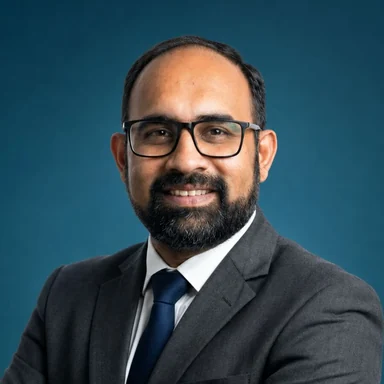
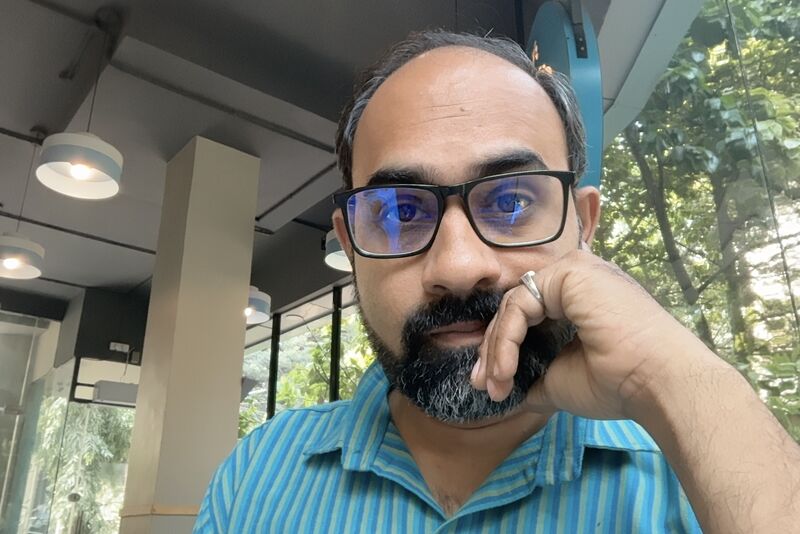
Parth Abhyankar, founder of Resonics Technologies, at his desk in Pune.

You'll be working with me

I'm Parth Abhyankar. I've been building operational software for 13 years, and I still run every process-mapping conversation myself.

We're a small team by design. You talk to the person who writes the code — not a project manager relaying requirements to a floor of developers. That's the whole reason our clients stay with us for years instead of projects.

Our story

FAQ

The hard questions

It depends on scope, and we publish the range rather than making you ask. A focused single-workflow tool starts from around ₹2 lakh. A system covering three or four connected workflows typically runs ₹4–8 lakh. A multi-department operational system is usually ₹8–25 lakh for a first phase. We give you a real number after the process-mapping conversation, not before — quoting blind is how projects go wrong.

Payment is tied to delivery milestones, not to the calendar, so you are never paying ahead of working software. If we stop at any milestone you keep everything delivered to that point — the code, the database, the process map and the signed scope — and you owe nothing for work not delivered. You can take that to another vendor and continue.

You do. The source code and the database are yours outright and are handed over to you at project close. We do not hold your data hostage, we do not licence your own system back to you, and you are not locked into us to keep it running.

No. Most of the systems we build sit alongside existing accounting or CRM tools rather than replacing them. Your accounts team keeps working the way it works, and the operational system exchanges the data that needs to move between them. Replacing software that already fits is expensive and pointless — we would rather integrate with it.

This is the real risk, and it is the reason we map the process before writing code. Software gets refused when it asks people to work in a way that does not match the job — different terminology, extra steps, a form that does not fit the exception everyone hits weekly. Mapping first means the system matches the operation your team already runs, so it removes work instead of adding it. We also train on your data, not a demo dataset, and roll out one department at a time.

Operational software needs someone on it. We cover bug fixes, security updates, workflow adjustments and support for your team under an annual contract. The scope and the cost are defined and agreed at handover, based on the size of the system and how much change you expect — you will know both before you go live, not after.

A first working version — something your team can actually use, not a demo — typically lands in 4–6 weeks. A complete multi-department rollout takes longer, and we phase it so you are getting value from the first module while the next is being built. We don't quote a timeline before we understand the scope.

No. We work across India. Most operational software projects are managed remotely after an initial discovery phase, and we have active clients outside Maharashtra.

Clients and company details

Operational systems running today, not portfolio logos. VAPT-certified Since 2013, 100+ projects Narayan Peth, Pune 411030 +91 986 030 1982

The process map

A 45-minute call where we map one of your workflows end to end. You get a one-page summary of what a system would need to do — yours to keep, whether or not we work together.

Book a process-mapping call

Or call directly: +91 986 030 1982 WhatsApp

Not ready to talk?

12 questions to answer before you brief any software vendor

The checklist we work through ourselves. Useful whoever you end up hiring.

On its way.

It should land in a minute or two. If you don't see it, check your spam folder.

Prefer not to give an email? Read it on the site.

Call WhatsApp